Christian Vintage Clipart: A Designer’s Real-World Embroidery Review
First Impressions: Warm, Reverent, and Quietly Confident
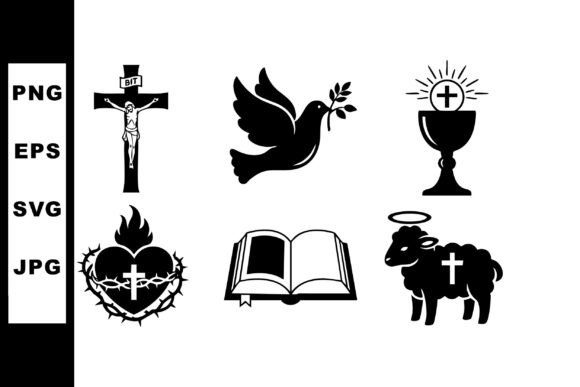
Opening Christian Vintage Clipart feels like flipping through a well-loved devotional book from the 1940s—soft edges, gentle line weight, and a quiet sincerity that avoids cliché. It’s not flashy or ornate; instead, it leans into restrained symbolism: a simple cross with subtle floral flourishes, a dove in mid-glide, or an open Bible with delicate scrollwork. As an illustrator and embroidery designer who’s stitched hundreds of faith-based pieces for boutique clients and Etsy sellers, I immediately sensed its strength: it reads as handmade *before* it’s even stitched. That’s rare. Most clipart veers toward either stiff vector sterility or overworked digital busyness—but this lands in the sweet spot between reverence and approachability.
Where It Shines: Real Projects, Real Customers
I tested Christian Vintage Clipart on a custom embroidered cotton tote bag for a local church’s women’s ministry—a project where tone matters as much as technique. The design was scaled to 3.8" wide and stitched onto natural canvas with matte cotton thread. Result? Instant warmth. Customers didn’t just see “a cross”—they paused, smiled, and said things like, “It feels like something my grandmother would’ve framed.” That emotional resonance is gold for small shop owners and craft fair vendors. It works equally well on baby onesies (paired with soft pastel thread), linen pillow covers for nursery decor, or unbleached tea towels for holiday kitchen gifts. For Etsy sellers, it adds quiet distinction to listings—no shouting, just substance. And because the layout avoids tight clusters and micro-details, it translates cleanly to sweatshirt embroidery and embroidered patches without excessive stitch density or thread breaks.
Why It Fits Boutique Branding—Not Just Religious Niche
Don’t mistake Christian Vintage Clipart for “church bulletin art.” Its restraint makes it versatile for lifestyle brands: think apothecary labels, slow-living journals, or farmhouse-style kitchen decor. I used one motif as a subtle corner accent on a set of hand-stitched aprons for a small-batch baking supply shop—and customers loved how it whispered intention without dominating the product. That balance elevates perceived value. A personalized gift isn’t just “embroidered”; it feels considered, heirloom-adjacent. For apparel decorators, that means repeat orders and word-of-mouth trust.
Where to Proceed Thoughtfully
Vintage charm comes with practical caveats. Because the lines are intentionally fine and the motifs rely on negative space, Christian Vintage Clipart demands attention to fabric and stabilization. On thin cotton or stretchy knits, those delicate stems or script-like lettering can blur or pucker without medium-weight cutaway stabilizer. On dark fabric, low-contrast thread choices (like charcoal gray on navy) risk losing definition—test in black-and-white mockups first. And avoid cramming it into hoops smaller than 4x4" unless you’re willing to simplify by hand or adjust density manually. Curved surfaces—like the front of a structured cap—will compress the top and bottom curves slightly; preview with a printable mockup to confirm proportions hold.
Stitching Notes Every Designer Should Check
- Test on scrap fabric first—especially if using textured weaves (burlap, heavy linen) where fill stitches may catch unevenly.
- Review stitch density: Not too sparse (risks gaps on curved lines), not too dense (can cause stiffness on baby embroidery or lightweight totes).
- Confirm hoop size compatibility before digitizing or scaling—some motifs sit close to the edge and may require repositioning.
- Inspect small details under magnification: tiny dots, fine crossbars, or serif endings may vanish at under 2.5" scale.
- Check licensing before selling finished products or bundling into digital embroidery files—Christian Vintage Clipart falls under Illustrations, so commercial use rights must be verified per source.
How It Shapes Perception—Beyond the Stitch
In handmade product markets, design integrity directly impacts customer trust. A poorly executed Christian motif can feel performative or dated; Christian Vintage Clipart sidesteps both traps. Its authenticity reads as confident, not contrived. That builds credibility—whether you're a solo crafter listing on Etsy or a small shop owner developing seasonal holiday embroidery. Buyers don’t just buy a cross—they buy meaning, care, and continuity. When stitched cleanly, it reinforces brand consistency across product lines: same visual language on a baby blanket, a wedding guest towel, and a pastor’s retirement gift. And because it avoids trend-driven ornamentation, it stays relevant across seasons and generations.
A Final Thought for Creative Entrepreneurs
If you’re choosing embroidery design assets for long-term use—not just one-off projects—Christian Vintage Clipart earns its place in your library. It’s not a “quick win” design; it’s a thoughtful tool. It invites slower stitching, better fabric pairings, and more intentional storytelling. Use it to elevate a simple tote into a keepsake. Let it soften the edges of modern minimalism with quiet reverence. Or let it anchor a collection of faith-based craft business items without ever feeling preachy. Just remember: great clipart doesn’t do the work for you—it gives you room to do the work *well*. Test it. Refine it. Make it yours. Then watch how customers respond—not to the symbol alone, but to the care behind it.