Jesus Loves You Bro
A Designer’s First Glance: Warm, Sincere, and Surprisingly Versatile
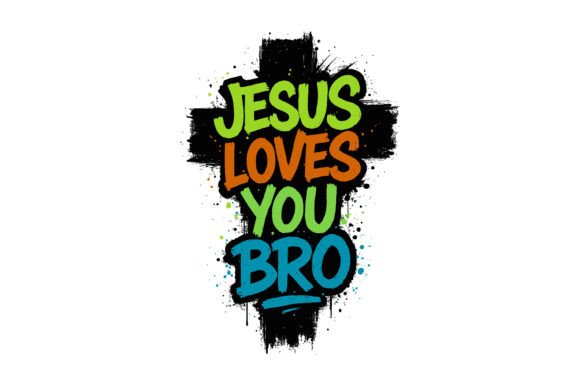
When Jesus Loves You Bro popped up in my design queue, I paused—not because it’s flashy or technically complex, but because it carries weight. It’s not just a phrase; it’s an emotional anchor. Visually, it’s clean and centered, with gentle curves in the lettering and a soft, approachable rhythm. There’s no aggressive script or over-the-top embellishment—just warmth, sincerity, and quiet confidence. That makes it instantly trustworthy for handmade products where authenticity matters more than trend-chasing.
Real Project Test: A Linen Tote Bag for a Faith-Based Boutique
Last week, I stitched Jesus Loves You Bro onto a natural linen tote bag destined for a local boutique that sells curated faith-inspired gifts. I used medium-weight cutaway stabilizer, 40-weight polyester thread, and a 5” x 7” hoop. The result? Crisp, legible lettering with no puckering—even on the slightly nubby texture of linen. Customers responded immediately: “That’s the one I’m buying for my nephew,” said one mom. “It feels personal, not preachy.” That’s the sweet spot: Jesus Loves You Bro doesn’t shout—it invites. It works because it’s designed like a conversation, not a billboard.
Where It Shines (and Where It Needs Extra Care)
Jesus Loves You Bro is especially effective on structured, stable fabrics: cotton canvas totes, midweight sweatshirts, denim jackets, and woven tea towels. Its balanced letter spacing and moderate height (roughly 3–4 inches tall at standard scale) make it highly readable without crowding. As a machine embroidery design, it leans into satin stitch for outlines and smooth fill stitch for solid areas—clean, consistent, and well-paced.
But here’s what I watched closely:
- Small hoop sizes: Below 4” wide, the lettering starts to lose breathing room—especially the lowercase “o” and “u.” If you’re stitching on a cap or baby onesie, confirm the scaled-down version retains clarity before committing.
- Stretchy or thin fabric: On lightweight jersey or baby rib knit, I added tear-away + cutaway combo stabilizer and slowed my machine speed. Without it, the satin stitch edges pulled slightly. Not a dealbreaker—but a must-test for custom apparel.
- Dark fabric: The design reads beautifully in white or ecru thread on navy, charcoal, or black—but avoid pale pastels unless you’re using high-contrast thread. I tested mint thread on charcoal and found the message softened too much. Stick to crisp neutrals or bold primaries for maximum impact.
- Curved surfaces: On a baseball cap front panel, I repositioned the design slightly lower to follow the curve—and used a cap frame. It held up, but the “B” and “o” needed a light tug-and-smooth post-stitch to relax the tension. Worth the extra minute.
More Than Just a Phrase: How It Elevates Your Craft Business
As an Etsy seller and small shop product developer, I pay close attention to how a design affects perceived value—and Jesus Loves You Bro quietly raises the bar. It reads as intentional, not generic. That translates directly to customer trust: buyers assume care went into the selection, digitizing, and execution. For faith-based brands, it reinforces consistency without leaning into cliché. And for personalized gifts—like a baptismal pillow cover or a graduation sweatshirt—it adds meaning without requiring customization beyond thread color or placement.
I’ve also used it as part of a coordinated set: same design, three sizes, stitched on matching kitchen towels, aprons, and oven mitts for a church fundraiser. Because the layout is so balanced, scaling worked cleanly across formats—no awkward distortion or lost detail. That’s rare in heartfelt text-based embroidery files.
Design Notes Every Embroidery Professional Should Run Through
Before stitching Jesus Loves You Bro on your next project—or listing it in your digital embroidery file shop—here’s my quick checklist:
- Test on scrap fabric first, especially if you’re using textured weaves, blends, or eco-fabrics with irregular surfaces.
- Check thread color contrast in both daylight and indoor lighting—some creams look warm under bulbs but cool in sunlight.
- Review stitch density: This design avoids over-stuffing, but if you’re layering it over another motif (e.g., a cross or floral border), confirm there’s enough negative space between elements.
- Confirm hoop size compatibility before sending to production—especially if you’re batch-stitching for wholesale or craft fair inventory.
- Inspect small details like the subtle curve on the “J” and the tail of the “y.” They’re delicate but intentional—don’t sacrifice them for speed.
- Test in black and white mockups—yes, really. It reveals whether the phrase holds visual weight when stripped of color psychology.
- Compare light vs. dark fabric backgrounds using your actual thread palette. What reads clearly on ivory may vanish on heather gray.
- Use proper stabilizer—not just “some,” but the right type for your fabric + design combo. Cutaway remains my go-to for this design on anything heavier than voile.
- Verify licensing before selling finished items or bundling Jesus Loves You Bro into digital embroidery kits. Since it falls under Crafts, commercial use rights aren’t automatic—always double-check.
Final Thought: A Design That Works Quietly, But Deeply
Jesus Loves You Bro isn’t trying to win awards for complexity. It wins by landing right—emotionally, visually, and practically. It fits seamlessly into nursery decor, holiday embroidery bundles, small shop merchandise, and even wedding guest favors (think: embroidered handkerchiefs or linen napkins). It supports your brand instead of competing with it. And for makers who stitch with heart—not just technique—it’s a reminder that sometimes the most powerful machine embroidery design is the one that says exactly what needs saying, with zero extra noise.